
How to manage multiple job interviews and offers

Written by Tania Rogers
Receiving interest from several employers at once can be an exciting stage of your job search. But when interviews overlap, deadlines approach and more than one offer is on the table, deciding what to do next can quickly become complicated.
In our experience, the best way to manage multiple job interviews and offers is to stay organised, communicate honestly, understand your priorities and assess each opportunity on its own merits. You don’t need to pursue every available role or accept the first offer you receive. You need to find the opportunity that best aligns with your career goals.
Here are five practical ways to manage multiple opportunities while protecting your professional reputation.
1. Focus on the opportunities that are right for you
When you’re actively looking for a new role, more interviews don’t necessarily mean a better outcome.
Before progressing with several opportunities, take the time to identify what matters most in your next move.
- Role and responsibilities: Will the position use your existing strengths and give you room to develop?
- Career progression: Does it offer a realistic pathway towards your longer-term goals?
- Salary and benefits: Does the remuneration package reflect your experience and expectations?
- Culture and leadership: Do the firm’s values, management style and working environment suit you?
- Flexibility and location: Will the commute, working arrangements and hours fit your circumstances?
For accounting professionals, this might mean weighing up a larger firm’s training and promotion opportunities against a smaller practice’s closer client relationships and broader responsibilities.
2. Be transparent about other interviews
Once you’ve established your priorities, focus on the roles that genuinely meet them. You can always broaden your search if those opportunities don’t progress.
Yes, you can be transparent about other interview processes without sharing every detail.
Employers understand that candidates may be considering several opportunities, particularly when specialist skills are in demand. Communicating honestly can help everyone manage expectations and plan realistic timelines.
You don’t need to disclose the names of other firms or provide a running commentary on every interview. Instead, explain your situation professionally while making your interest in the role clear. Honest, professional communication helps build trust throughout the process.
“I’m currently exploring a couple of opportunities that align with my career goals, but I’m genuinely interested in this position and would like to understand more about the role and the team.”
3. Manage job offers while still interviewing
Receiving an offer before completing your other interviews can put you under pressure to make a quick decision.
Before responding, clarify the offer’s details and the deadline for your decision. Make sure you understand the salary, responsibilities, benefits, reporting arrangements and any conditions attached to the offer.
- Ask for a reasonable period to consider the offer. Thank the employer and confirm when they need your response.
- Contact your recruiter. If you’re working with a recruitment consultant, let them know about the offer and any deadline. They may be able to coordinate with the other employer and clarify the likely next steps.
- Update other employers where appropriate. If another opportunity is a serious contender, let the employer or recruiter know that you have an offer deadline and ask whether the process can be clarified or brought forward.
- Make a decision based on what you know. Consider the quality of each opportunity rather than assuming that the process furthest along is necessarily the best fit.
You don’t have to accept an offer immediately simply because it’s the first one received. Equally, you shouldn’t assume an employer can hold a position open indefinitely. Be realistic about the time you request, agree on a deadline and stick to it wherever possible.
4. Compare job offers beyond salary
If you receive two or more offers, it’s worth taking a step back before making your decision.
Salary matters, but it shouldn’t be the only consideration. A higher package may be attractive in the short term, but another role might offer stronger leadership, more varied work or a better pathway towards your career goals.
Use a consistent set of criteria to compare your options:
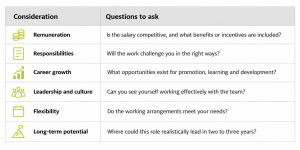
For someone working towards a Manager or Partner position in public practice, for example, access to client relationships, business development experience and a clear progression pathway might be just as important as the initial salary.
Choose the opportunity that best aligns with your career goals, not simply the one offering the most money.
5. Decline job offers professionally and maintain relationships
Once you’ve accepted an offer or decided to pursue another opportunity, let the other employers know as soon as reasonably possible.
A prompt, courteous response allows them to move forward with their recruitment process and helps you maintain positive professional relationships.
If you’re working with a recruiter, speak with them first so they can help communicate the decision appropriately.
Keep your message brief and appreciative. You don’t need to provide an extensive explanation, criticise the role or disclose the details of the offer you’ve accepted.
“Thank you for the opportunity to meet with the team and learn more about the position. After careful consideration, I’ve decided to pursue another opportunity that more closely aligns with my current career goals. I appreciate your time and consideration and wish you and the team all the best.”
Even if a role isn’t right for you now, you may cross paths with the employer or hiring manager again. How you handle the process can influence that future relationship.
Make your next career move with confidence
Managing multiple interviews doesn’t have to be overwhelming. By staying organised, communicating clearly and focusing on what matters most, you can make a more confident career decision.
At Lawson Delaney, we help accounting and finance professionals find opportunities that align with their skills, experience and career ambitions.
Explore opportunities with Lawson Delaney or contact me Tania Rogers at tania@lawsondelaney.com.au for a confidential career conversation.
Frequently asked questions about multiple job interviews and offers
Is it okay to interview with several companies at the same time?
Yes. You can explore multiple opportunities simultaneously, provided you’re honest about your circumstances and can meet your commitments to each employer. Keep track of interview dates, deadlines and the status of each application.
Should I tell a recruiter that I have another job offer?
Yes. If you’re working with a recruiter, let them know as soon as possible. Share the decision deadline and explain which other processes are still active. This helps them communicate accurately with the hiring employer and advise you on your options.
How long should I take to consider a job offer?
There is no universal timeframe. Ask the employer when they need your decision and request a reasonable period to review the offer. The appropriate timeframe will depend on the circumstances, the employer’s needs and whether you require clarification or further discussion.
Should I accept the highest-paying job offer?
Not automatically. Consider the total remuneration package alongside the role’s responsibilities, team, culture, flexibility and long-term career prospects. The right choice is the one that best meets your priorities, not necessarily the one with the highest starting salary.
What if I accept a job offer and then receive a better one?
This situation can be difficult, so it’s worth carefully considering your options before accepting an offer. Once you’ve accepted, you should take that commitment seriously. If circumstances change, review the terms of your agreement and seek appropriate advice if needed. Communicate promptly and professionally rather than simply withdrawing without explanation.
Written by Tania Rogers